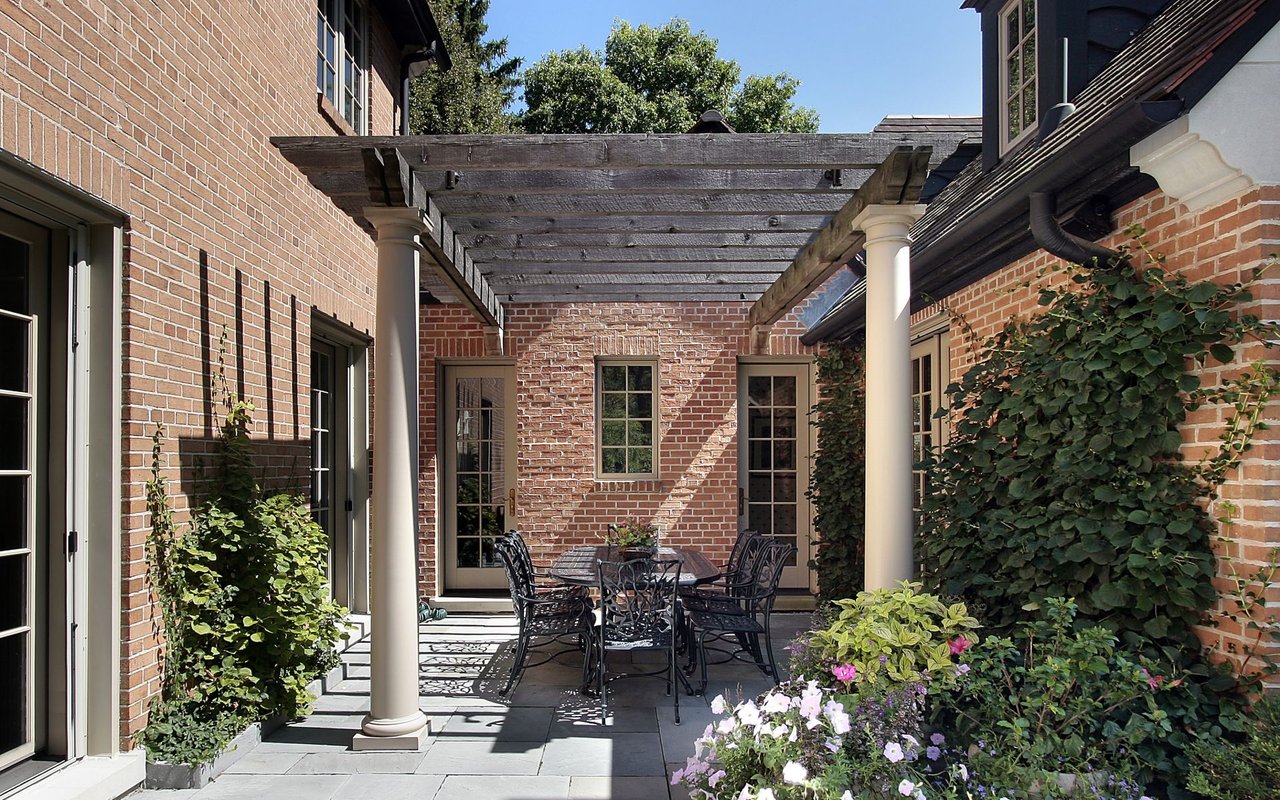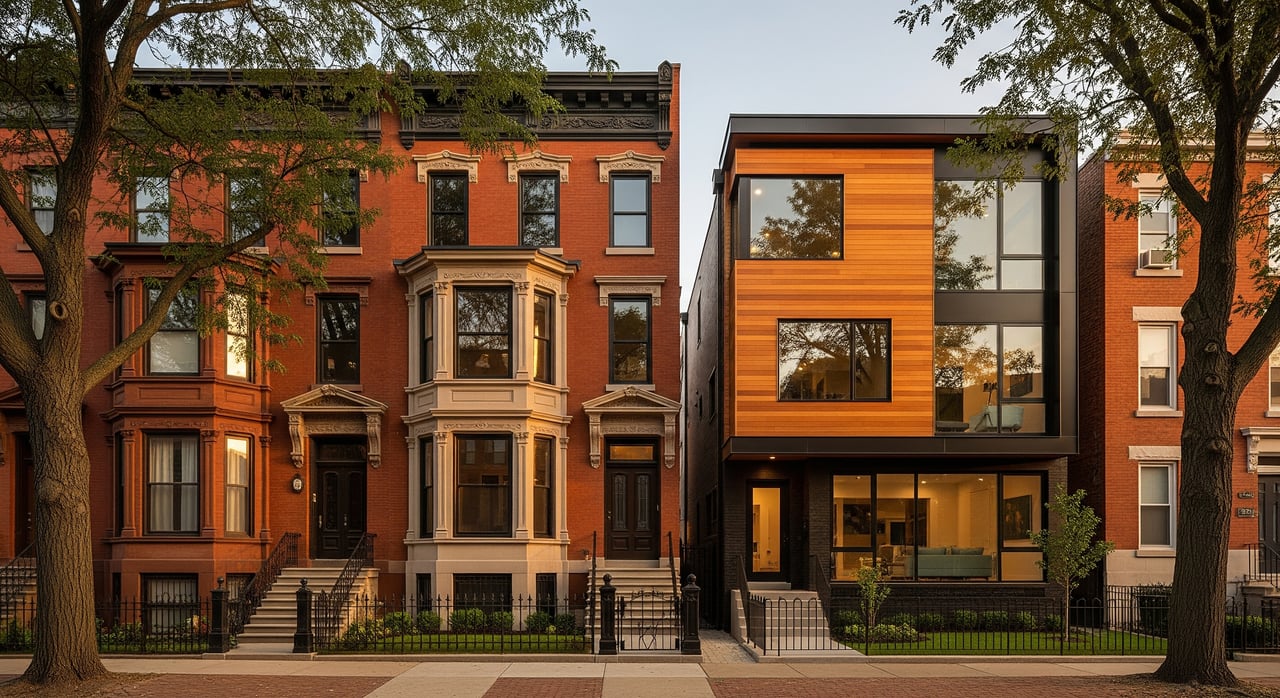
Do you find yourself torn between the charm of tall ceilings and brick details and the ease of a move-in ready home? In St. Louis’s 63104, especially around McKinley, you can choose from 19th-century architecture and newer infill builds. Each has real trade-offs in cost, permits, energy use, and resale. This guide breaks down what to weigh so you can move forward with confidence. Let’s dive in.
What “historic” means in McKinley 63104
Historic homes in 63104 often date from the late 1800s to early 1900s. You will see Victorian, Italianate, Queen Anne, and early 20th-century brick rowhouses with original woodwork, plaster walls, and decorative details. These homes offer distinctive character and craftsmanship.
Newer options include recent infill construction, gut-rehabbed shells with modern systems, and contemporary townhomes or duplex conversions. These homes typically feature open floor plans, updated kitchens and baths, improved insulation, and sometimes off-street parking.
Condition and maintenance realities
Older homes can be wonderfully solid, but age brings upkeep. Plan for a careful assessment and a realistic budget.
Common issues in older homes
- Foundation settlement, cracked or parged masonry, and worn mortar joints in brick walls.
- Roofs, flashing, and gutters nearing end-of-life.
- Original windows that are drafty or deteriorated; replacements may be regulated in historic districts.
- Legacy systems like knob-and-tube or cloth-insulated wiring and older plumbing such as galvanized supply or cast-iron drains.
- Lead-based paint in homes built before 1978 and potential asbestos in insulation or old adhesives.
- Plaster repairs and historic carpentry that require specialty trades.
What to expect with newer or rehabbed homes
- Newer systems and materials can lower near-term maintenance, though quality varies by builder or contractor.
- Modern construction can carry its own risks, such as moisture intrusion at new interfaces if details are missed.
- A strong inspection still matters. Even a recent rehab benefits from a thorough look at mechanicals, insulation, and moisture management.
Permits and historic designations in St. Louis
Some 63104 addresses fall within local or national historic districts. Local designation has the most impact on your plans.
- Local preservation rules often require review and approval for exterior changes, including windows, porches, additions, and sometimes paint colors. Build extra time into your project timeline.
- If a property is in a local district, you should review its design guidelines before planning work. Requirements aim to keep the neighborhood’s character consistent.
- There may be preservation-focused incentives or grants at the city or state level. Availability changes, so verify current programs before you budget.
Tip: Before you make an offer, ask whether the home sits in a local historic district and what that means for exterior updates you are considering.
Financing and insurance differences
Lenders and insurers look closely at older homes, especially those that need repairs.
- If a property has significant safety or habitability issues, some loan programs may require repairs before closing.
- Renovation financing can help. Buyers often use options like FHA 203(k) or Fannie Mae HomeStyle Renovation to roll improvements into the mortgage.
- Appraisals rely on local comparable sales. A home that needs work may appraise below your offer unless renovations are documented.
- Insurance on older homes can cost more if electrical or plumbing systems are outdated. Ask early about replacement-cost coverage for specialty materials or historic features.
Safety and environmental testing
Health and safety should be part of your due diligence, especially with older construction.
- Federal law requires lead-based paint disclosure for pre-1978 homes. Plan for testing and safe work practices if you will repaint or renovate.
- If you suspect older insulation or flooring adhesives, talk to a professional about asbestos testing.
- Consider a sewer scope and moisture evaluation, especially in basements. Radon testing is also advisable in Missouri.
Energy efficiency and comfort
Historic homes can be comfortable and efficient with the right upgrades, but the path is different than with newer construction.
- Masonry walls and single-pane windows often mean higher heating and cooling costs. Sensitive retrofits like attic insulation, storm windows, secondary glazing, and efficient HVAC can help.
- Work with contractors who understand historic details. The goal is to improve comfort without damaging original character.
- Newer homes usually start with better insulation, tighter building envelopes, and modern HVAC, so the utility profile is often more predictable from day one.
Architecture, lifestyle, and resale
Your lifestyle preferences matter as much as the numbers.
- Historic homes offer unique character and timeless details that many buyers value. They can command a premium when well maintained and thoughtfully updated.
- Newer homes deliver modern layouts and fewer early projects. Turnkey convenience can be a major advantage for busy schedules.
- Resale depends on local buyer preferences, the quality of any rehab work, and the neighborhood’s overall trajectory. Historic districts can stabilize or enhance values, though some buyers may prefer fewer restrictions.
Neighborhood practicalities in 63104
Living near downtown St. Louis brings its own benefits and trade-offs.
- Many homes are close to restaurants, parks, and transit, but proximity varies block by block. Verify commute times and access to amenities for your specific address.
- On-street parking is common with older housing. Some newer infill properties add garages or off-street spots.
- Review utility history, check flood maps where relevant, and confirm any permit history before planning improvements.
Checklist: Buying a historic home in 63104
Use this step-by-step list to keep your purchase on track.
- Confirm designation status
- Ask whether the property is in a local historic district and review applicable guidelines.
- Hire experienced professionals
- Full home inspection by an ASHI-certified inspector.
- Specialist evaluations as needed: structural engineer, termite/pest, sewer scope, radon, lead testing for pre-1978 homes, and asbestos sampling if suspected.
- Contractor with historic rehab experience to estimate repair costs.
- Align financing early
- Discuss renovation loan options and underwriting requirements. Seek pre-approval that reflects potential repairs.
- Check insurance now
- Get quotes and confirm replacement-cost assumptions for older materials and systems.
- Set a realistic budget
- Add a contingency for unforeseen repairs and potential historic review-related costs.
- Review energy and utilities
- Request recent utility bills and discuss preservation-friendly efficiency upgrades.
- Review disclosures
- Examine the seller’s property disclosures and required lead-based paint forms for pre-1978 homes.
- Plan your timeline
- Ask the city about permit and review timelines for any exterior work you are considering.
Checklist: Selling a historic home
If you are listing a historic property, a little preparation can widen your buyer pool.
- Consider a pre-listing inspection
- Identify safety items and deferred maintenance to avoid surprises later.
- Gather documentation
- Permits, rehab records, photos, and any proof of historically appropriate work help build buyer confidence.
- Fix high-impact items
- Address major mechanical, electrical, plumbing, or roofing concerns that could limit financing.
- Market with clarity
- Highlight the home’s unique features and neighborhood benefits while being transparent about any exterior-review requirements.
- Provide required disclosures
- Ensure buyers receive the lead-based paint disclosure for pre-1978 homes and all local forms.
How to choose what fits you
If you thrive on character and do not mind ongoing care, a historic home may be a perfect fit. Plan for inspections, regulatory steps, and energy upgrades over time. If you prefer predictable upkeep and modern layouts, a newer home or a high-quality rehab could serve you better.
Either way, focus on the property’s true condition, your budget for improvements, and how the home supports your daily routine. With the right plan, you can enjoy 63104’s location and lifestyle in a home that matches your priorities.
Ready to compare options or start touring? Our team blends neighborhood knowledge with patient guidance, from financing referrals to inspection strategy and professional listing exposure. Reach out to the experts at The Winckowski Group to plan your next move in 63104.
FAQs
Can I use FHA financing on a historic home in 63104?
- Yes, the home must meet safety and habitability standards; consider FHA 203(k) if repairs are needed.
Will a local historic district stop me from replacing windows?
- Possibly; visible exterior changes often need approval, and compatible replacements or restoration may be required.
Are there tax incentives for rehabbing a historic house?
- Federal credits typically apply to income-producing properties; check current state or local programs before budgeting.
How much extra should I budget for older-home maintenance?
- Plan for higher annual maintenance and occasional larger projects like roofs, masonry, or foundation work.
What safety tests should I order for an older 63104 home?
- Lead paint, asbestos if suspected, radon, a sewer scope, and moisture assessments are smart additions to a general inspection.