Trying to make a Saint Peters home payment work in a fast-moving market? You are not alone. With home values in 63376 around $316,037, median sale prices near $330,341, average rent at $1,625, and homes going pending in about 6 days as of September 30, 2025, many buyers are looking for smarter ways to stretch their budget. The good news is that house hacking and shared living can create flexible options if you plan carefully. Let’s dive in.
What house hacking means in Saint Peters
House hacking usually means buying a home you live in and using part of it to help offset your housing costs. In Saint Peters, that can look like renting a bedroom to a boarder, creating a more private basement living area, sharing a home with family, or choosing a property type like a duplex, condo, townhouse, or multi-family setup that fits your goals.
That flexibility matters locally. Saint Peters is a largely owner-occupied market, with a 79.0% owner-occupied housing rate and a population estimate of 61,398, according to U.S. Census QuickFacts. The city also reports a housing mix that includes about 21,000 attached and detached single-family homes and roughly 5,500 multiple-family units existing or approved, which means shared-living ideas are not limited to one type of property in town. You can review that housing context in the city’s planning and housing materials.
Why shared living appeals to local buyers
For many buyers, shared living is less about trendiness and more about practicality. If you want to lower monthly costs, live with family, or buy sooner than you could on your own, a home with room for another adult can open more options.
Shared living can also work well for multigenerational households. A finished lower level, extra bedroom suite, or home with separated living areas may give everyone more breathing room while still keeping one household under one roof.
In a market where affordability and speed both matter, house hacking can give you another path forward. Instead of waiting for the perfect price drop, you may focus on a home layout that supports your budget over time.
Property types that can work
Saint Peters offers several property styles that may support shared living. The right fit depends on how much privacy you want, how long you plan to stay, and whether the setup is for roommates, relatives, or future rental use.
Single-family homes with flexible layouts
A single-family home can be a strong house-hacking option if it has a finished basement, split-bedroom layout, extra bath, or separate living space. This is often the most realistic path for buyers who want owner-occupied living with room for a boarder or family member.
The city’s occupancy language specifically applies across property types including single-family homes, townhouses, condos, duplexes, apartments, and multi-family dwellings. You can see that in Saint Peters’ Certificate of Occupancy requirements, which is a useful reminder that shared living is not just a duplex strategy.
Townhomes and condos
Townhomes and condos can work when they offer dual primary suites, lower maintenance, and enough separation for everyday privacy. They may be especially appealing if you want to reduce upkeep while still sharing costs with another adult.
Before moving forward, you would want to verify any community rules that affect occupancy or leasing. The article topic here is really about layout and local city process, so it helps to think through both the home itself and any property-specific restrictions during your search.
Duplexes and multi-family options
If your goal is a more traditional house-hack setup, a duplex or multi-family property may be worth exploring. These properties can provide clearer separation between living spaces, though inventory may be more limited than standard suburban single-family homes.
This route can appeal to buyers who want distinct units rather than shared common areas. It can also create a different financing and occupancy conversation, so it is smart to line up both your agent and lender early.
Basement living space matters here
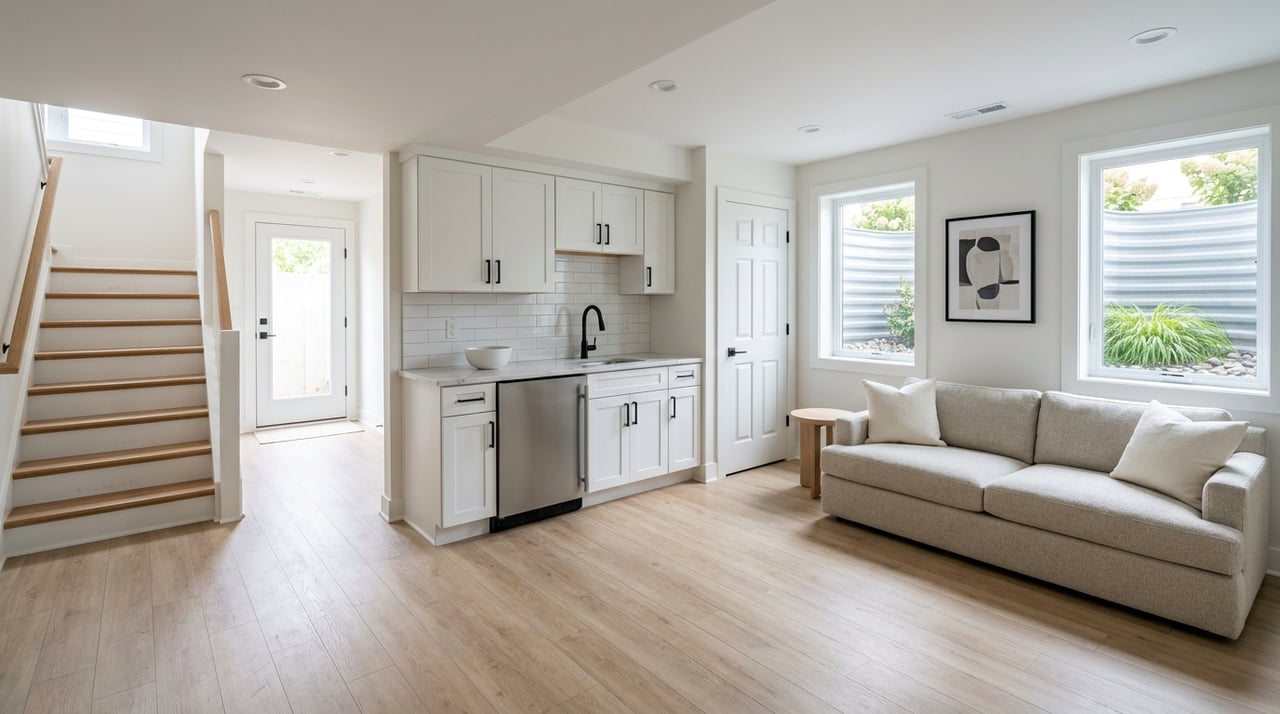
In Saint Peters, finished basements are one of the most important features to watch when you are thinking about shared living. A basement can offer privacy, storage, and a clear separation of space, but it needs to be more than just a couch and a mini fridge to function well day to day.
From a lifestyle standpoint, buyers often prefer features like:
- A separate or semi-private entrance
- A private or nearby bathroom
- Laundry access
- Storage space
- Better sound separation
- Clear bedroom space instead of an open rec room only
Those features can make a setup feel more comfortable, whether the space is used by a family member, roommate, or long-term guest. Still, design preferences are only part of the picture. Safety and code compliance come first.
Basement code basics to know
According to Saint Peters’ finished basement guide, a basement bedroom must have an egress window with a 5-square-foot opening and a sill height no greater than 44 inches. Finished ceiling height must be at least 7 feet.
The same city guide states that smoke detectors are required in bedrooms and outside sleeping areas, carbon monoxide detectors are required outside sleeping areas, and bathroom exhaust fans must vent to the exterior. If you are touring homes and a basement setup looks ideal on paper, these details help you evaluate whether the space is likely to function as legal living space.
Permits and inspections come first
If you are planning to finish a basement, add a bathroom, or modify structural, plumbing, mechanical, or electrical systems, Saint Peters says the appropriate permits are required. The city’s Building Code Compliance page also notes that the Building Department inspects property for code compliance.
That means any basement conversion or suite-style project should start as a permit and inspection conversation, not just a remodel idea. The city’s basement guide specifically recommends speaking with an inspector for details not covered in the guide. That is one of the smartest early steps you can take before budgeting improvements.
What changes if the home becomes a rental
This is another detail buyers often miss. Saint Peters says all rental property within city limits must be registered with and inspected by the Building Department before occupancy.
The city also states that a Certificate of Occupancy is required when a non-owner-occupied single-family residence or multi-family dwelling changes use, tenancy, or occupancy. A re-occupancy inspection is required each time occupancy changes when the occupant is not the owner on file. By contrast, Saint Peters does not require an occupancy inspection for the sale of an owner-occupied home, as long as it remains owner occupied.
Can roommate income help you qualify?
Sometimes, but not always. This is where house hacking gets more technical, and it is important not to assume every lender or loan program treats shared income the same way.
According to Fannie Mae’s rental income guidance, rental income from your principal residence generally cannot be used to qualify, with specific exceptions for boarder income and principal-residence properties with accessory units. For a one-unit principal residence with an accessory dwelling unit, the income can be used only under certain conditions, and the qualifying amount is limited to 30% of total qualifying income.
FHA has also updated its treatment of boarder income. In HUD Mortgagee Letter 2025-04, effective for FHA case numbers assigned on or after March 14, 2025, a boarder is defined as a person renting space inside the borrower’s dwelling unit. FHA says boarder income can count as effective income if you have a 12-month history of receiving it, are still receiving it, and the lender documents the required history, address, and written boarding agreement. FHA also limits the amount used for qualifying to 30% of total monthly effective income.
Boarder versus ADU income
This distinction matters. HUD separates a boarder from an ADU renter, and lenders may underwrite those setups differently.
In plain terms, renting a room inside the home, using a basement living area, and owning a property with a true accessory dwelling unit are not always treated the same for mortgage qualification. If house hacking is part of your buying plan, verify the rules with your lender early so your home search matches what your financing can actually support.
Smart ways to evaluate a shared-living home
When you tour homes in Saint Peters, it helps to think beyond bedroom count. A house may look spacious online but still function poorly for shared living if privacy, access, or code issues are not addressed.
Here are a few practical questions to ask while you search:
- Is there a realistic sleeping area with proper egress?
- Does the layout offer privacy between household members?
- Is there convenient access to a bathroom?
- Would any planned changes require permits?
- If the property later becomes a rental, what city steps would apply?
- Does your lender view the setup as boarder income, ADU income, or no qualifying income at all?
These questions can save you time and help you avoid buying a home that only seems flexible. The best house hack is one that works both financially and functionally.
Best-fit buyers for this strategy
House hacking and shared living can make sense for several types of buyers in Saint Peters. First-time buyers may use it to reduce monthly costs. Multigenerational households may use it to share expenses while giving everyone more usable space.
It can also work for buyers who want a home that adapts over time. A basement suite or extra living area might serve a roommate today, a relative next year, and flexible bonus space later on.
The key is choosing a property with a layout that supports your real life, not just your current spreadsheet. In a community with a strong owner-occupied base and a variety of housing types, that kind of planning can make a big difference.
If you are thinking through house hacking or shared living options in Saint Peters, working with a local team can help you spot the layouts, code questions, and financing conversations that matter most. The Winckowski Group can help you search with a clear plan and find a home that fits both your budget and the way you want to live.
FAQs
What does house hacking mean for buyers in Saint Peters?
- House hacking usually means you live in the home and use part of it, such as a bedroom, basement area, or separate unit, to help offset housing costs through shared living.
What basement features matter for shared living in Saint Peters?
- Useful features include privacy, bathroom access, laundry, storage, and sound separation, while city code requires items such as proper egress for basement bedrooms, minimum ceiling height, and required smoke and carbon monoxide detectors.
Do Saint Peters homeowners need permits to finish a basement?
- Yes, Saint Peters requires permits for new construction or alterations to structural, plumbing, mechanical, or electrical systems, so basement finishing should begin with the city’s permit and inspection process.
Can roommate income help buyers qualify for a mortgage in Saint Peters?
- Sometimes, but it depends on the loan program and documentation, and both Fannie Mae and FHA place limits and conditions on using boarder or accessory-unit income.
What happens if a Saint Peters home later becomes a rental property?
- The city says rental property must be registered with and inspected by the Building Department before occupancy, and non-owner-occupied properties may also trigger Certificate of Occupancy and re-occupancy inspection requirements when tenancy changes.
Which Saint Peters property types can work for shared living?
- Shared living can work in single-family homes, townhouses, condos, duplexes, apartments, and multi-family properties, depending on layout, privacy, and how the home will be occupied.