Wondering why so many Florissant homes have that long, low look and easy everyday feel? That is not a coincidence. Florissant’s housing story is deeply tied to the postwar years, and if you are thinking about buying or selling here, understanding that mid-century foundation can help you make smarter decisions. From classic ranch layouts to split-level designs and practical update ideas, here is what to know about mid-century homes and lifestyle in Florissant. Let’s dive in.
Why Mid-Century Homes Matter in Florissant
Florissant’s housing identity is shaped by the postwar building boom. According to the city’s 2025 comprehensive plan, the median year built is 1960, and most of the housing stock was built between 1940 and 1979. That means when you look at homes across Florissant, you are often seeing the design choices and neighborhood planning ideas that defined mid-century suburban growth.
That same plan describes much of the housing stock as post-war and mid-century tract housing. Typical homes are often about 900 to 1,600 square feet, with 2 to 3 bedrooms, 1 or 2 bathrooms, and mostly one-story layouts on lots around 0.2 to 0.3 acres. In other words, Florissant offers the kind of practical, manageable housing that still fits many buyers’ needs today.
Florissant also remains a largely detached-home market. Current Census data shows that 78.4% of housing units are 1-unit detached structures, 66.5% of occupied units are owner-occupied, and 89.3% of residents lived in the same house one year earlier. That points to an established residential environment with relatively stable ownership, not a fast-changing new construction market.
What Mid-Century Homes Look Like
Ranch homes in Florissant
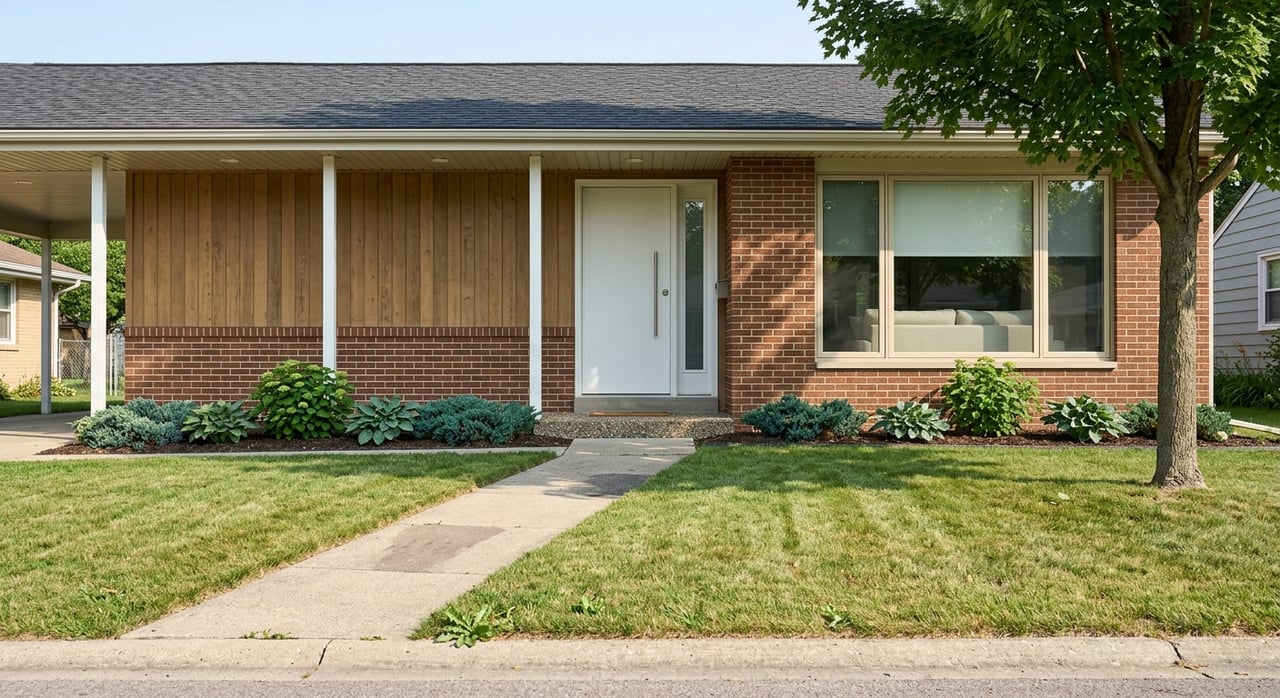
For many buyers, “mid-century” in Florissant means ranch homes. These houses are usually one story with a wide, asymmetrical front, low-pitched roofs, broad eave overhangs, and large windows such as picture windows. Many also include attached garages, which helped support the suburban lifestyle these homes were designed for.
Inside, ranch homes were built around function and ease. Research on 1950s ranch interiors notes that they often used clear living zones, built-ins, large living and dining spaces, and eat-in kitchens. The overall goal was a casual, family-centered layout that felt open and practical.
That design still appeals to many buyers now. A one-story layout can feel simple to navigate, and the footprint often gives you a direct connection between living spaces, the yard, and everyday routines.
Split-level homes in Florissant
Split-level homes are another important part of Florissant’s housing mix. This style grew out of the same postwar design era but separates living functions across multiple levels. Typically, the lower level includes the garage, utility area, and family room, the middle level has the main living and dining spaces, and the upper level contains bedrooms and bathrooms.
Split-level homes often keep the low-pitched roofs and wide overhangs seen in ranch homes. They can also work especially well on sloping lots. If you like a little more separation between gathering spaces and sleeping areas, this style may feel more flexible than a standard ranch.
What the Florissant Lifestyle Feels Like
Mid-century homes in Florissant are about more than architecture. They are part of a broader suburban lifestyle built around space, routine, and long-term livability. The city combines established neighborhoods with parks, recreation, and community resources that support everyday life.
Florissant’s parks and recreation system includes 20 parks and almost 400 acres. The city also offers two community centers, two aquatic centers, an 18-hole public golf course, and a covered ice rink. For many buyers, that kind of built-in recreation network adds real value to daily life.
STLCC-Florissant Valley is another nearby resource. The campus offers advising, tutoring, a library, fitness facilities, arts programming, and workforce-oriented programs. That adds another layer of convenience for residents who want access to education and community services close to home.
Taken together, these features support the practical appeal of Florissant’s mid-century neighborhoods. You get an established housing stock, detached homes, and city amenities that help make day-to-day life feel grounded and convenient.
Why Buyers Still Like These Homes
Mid-century homes continue to attract attention for simple reasons. They are often manageable in size, flexible in layout, and easier to maintain than larger homes. Research cited by the National Park Service notes that ranch homes continue to appeal to both first-time buyers and older buyers because they are affordable, adaptable, and relatively easy to live in.
In Florissant, that appeal is easy to understand. Many homes offer straightforward floor plans, usable yards, and a strong connection between indoor and outdoor spaces. If you want a home with character but still need practical square footage, this housing stock often checks that box.
At the same time, it helps to look closely at how the original design fits your current needs. Some homes are first-floor accessible, but the city’s housing plan notes that basement laundry rooms and larger yards can make daily life less convenient for some owners. A home that looks simple from the curb can still have features that affect long-term comfort.
What To Watch For During Home Tours
When you tour a mid-century home in Florissant, the details matter. Original features can add character, but they also shape how the house functions today. A thoughtful showing should focus on both style and livability.
Here are a few things worth paying attention to:
- Picture windows and large front-facing glass
- Built-ins and original storage features
- Rooflines and wide eaves that define the exterior look
- Closet space and general storage, which can be limited in some homes
- Basement laundry setups
- Kitchen changes or wall removals that may have altered the original flow
- In split-level homes, the number of stairs and how the levels connect
These points can tell you a lot about how well the home balances original character with modern use. In some houses, updates improve function without changing the overall feel. In others, renovations may have changed the layout in ways that are worth a closer look.
Lead Safety in Older Homes
Because much of Florissant’s housing stock predates 1978, lead safety should be part of your home tour checklist. The EPA notes that homes built before 1978 are more likely to contain lead-based paint. Renovation work like sanding, cutting, or replacing windows can create hazardous lead dust if it was not handled with lead-safe practices.
If a home has been updated, it is reasonable to ask what work was done and whether lead-safe practices were followed. This is especially relevant when you see newer windows, fresh trim work, or remodeled interior surfaces in an older house. It is a simple question that can help you better understand the property.
How Smart Updates Keep Mid-Century Character
One of the best things about Florissant’s mid-century homes is that many respond well to thoughtful updates. The goal does not have to be total reinvention. In many cases, the most successful improvements make the home more comfortable and efficient while keeping the features that give it its personality.
That can include updates to:
- Kitchens
- Bathrooms
- Mechanical systems
- Insulation
- Windows
A careful approach often works best. Preserving the horizontal profile, broad openings, built-ins, and overall flow can help a home still feel true to its mid-century roots even after major improvements.
For sellers, this matters because buyers often notice when a home feels updated but still cohesive. For buyers, it is a reminder that not every older home needs to be stripped down and redone to be livable. Sometimes the best version of a mid-century home is one that respects the original design while improving day-to-day function.
What This Means for Buyers and Sellers
If you are buying in Florissant, understanding the local housing stock helps you know what to expect. You are likely to see detached homes from the postwar era, especially ranches and split-levels, in established neighborhoods with relatively steady ownership. That gives you a very different experience from shopping in an area dominated by newer builds.
If you are selling, it helps to understand what buyers may value most in this part of the market. Layout, condition, sensible updates, yard usability, and preserved character can all shape how a buyer responds to your home. A strong strategy starts with knowing how your property fits into Florissant’s larger housing story.
Mid-century homes in Florissant are not just a design trend. They are the core of the city’s residential identity. If you know what to look for, they can offer a strong mix of practicality, personality, and long-term appeal.
If you are thinking about buying or selling in Florissant, The Winckowski Group can help you navigate the local market with clear advice, responsive communication, and neighborhood-focused guidance.
FAQs
What types of mid-century homes are common in Florissant?
- In Florissant, the most common mid-century home types are ranch homes and split-level homes built during the postwar period, especially from 1940 to 1979.
What size are many mid-century homes in Florissant?
- The city’s housing plan says many of these homes are about 900 to 1,600 square feet, often with 2 to 3 bedrooms, 1 or 2 bathrooms, and one-story layouts.
What should you check when touring a Florissant mid-century home?
- You should pay attention to original windows, built-ins, storage space, basement laundry, stair layout in split-level homes, and whether past renovations changed the home’s original flow.
Why is lead safety important in older Florissant homes?
- Because much of Florissant’s housing predates 1978, some homes may contain lead-based paint, and renovation work can create hazardous lead dust if lead-safe practices were not used.
Why do buyers still like mid-century homes in Florissant?
- Many buyers like these homes because they offer manageable sizes, practical layouts, detached-home living, and access to established neighborhoods with parks and community amenities.