If you are getting ready to sell in McKinley Heights, staging can make a bigger difference than many sellers expect. Buyers often decide how a home feels within seconds, and in a historic brick neighborhood, that first impression is about both livability and character. The right staging helps buyers picture their life in the home without covering up what makes it special. Let’s dive in.
Why staging matters in McKinley Heights
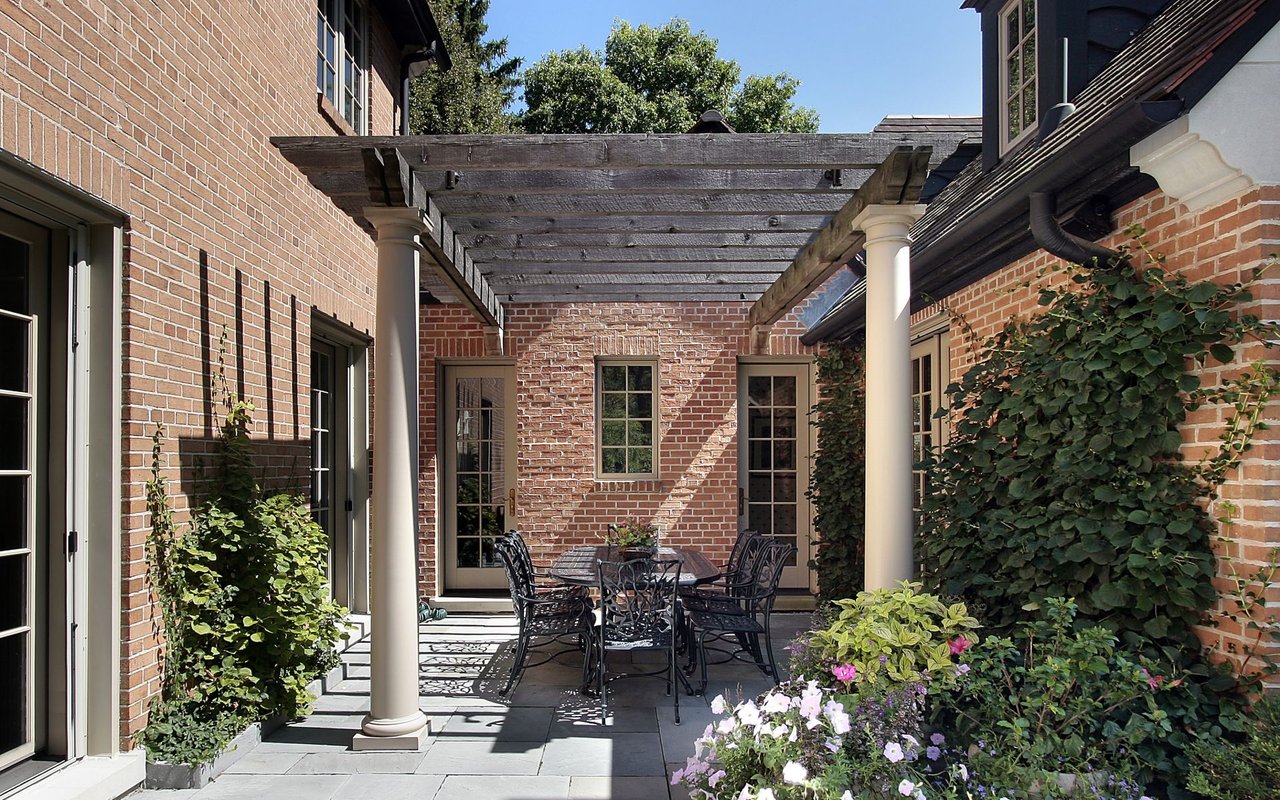
McKinley Heights has a distinct housing story, and that matters when you prepare a home for the market. According to the City of St. Louis neighborhood overview, the area is a south-side historic neighborhood with buildings dating from 1865 to 1931, with most built between 1900 and 1915. The housing stock is primarily residential and made up largely of two-story brick structures of similar scale and size.
That means buyers are not only looking at square footage. They are also reacting to original trim, brick, stair rails, window casings, and the overall feel of a historic home. Good staging in this part of 63104 should help those details stand out while making each room feel functional, open, and easy to understand.
The neighborhood is also active and evolving. City census data for 2020 show 1,668 residents, 1,040 housing units, 858 occupied units, and 182 vacant units, with population growth of 11.4% from 2010 to 2020. For sellers, that is a reminder that you are marketing to buyers who want both history and a home that feels ready for modern life.
What staging actually helps buyers do
Staging is not about making your home look fake or overly styled. It is about helping buyers understand the space quickly and confidently. In the 2025 Profile of Home Staging from NAR, 83% of buyers’ agents said staging makes it easier for buyers to visualize a property as a future home.
That same report also shows where attention matters most. Buyers’ agents ranked the living room, primary bedroom, and kitchen as the most important rooms to stage. Sellers’ agents most often staged the living room, primary bedroom, and dining room, which lines up well with how many McKinley Heights homes are laid out.
Start with the right rooms
If you are trying to decide where to spend your time and money, start with the rooms that shape a buyer’s first impression.
Living room first
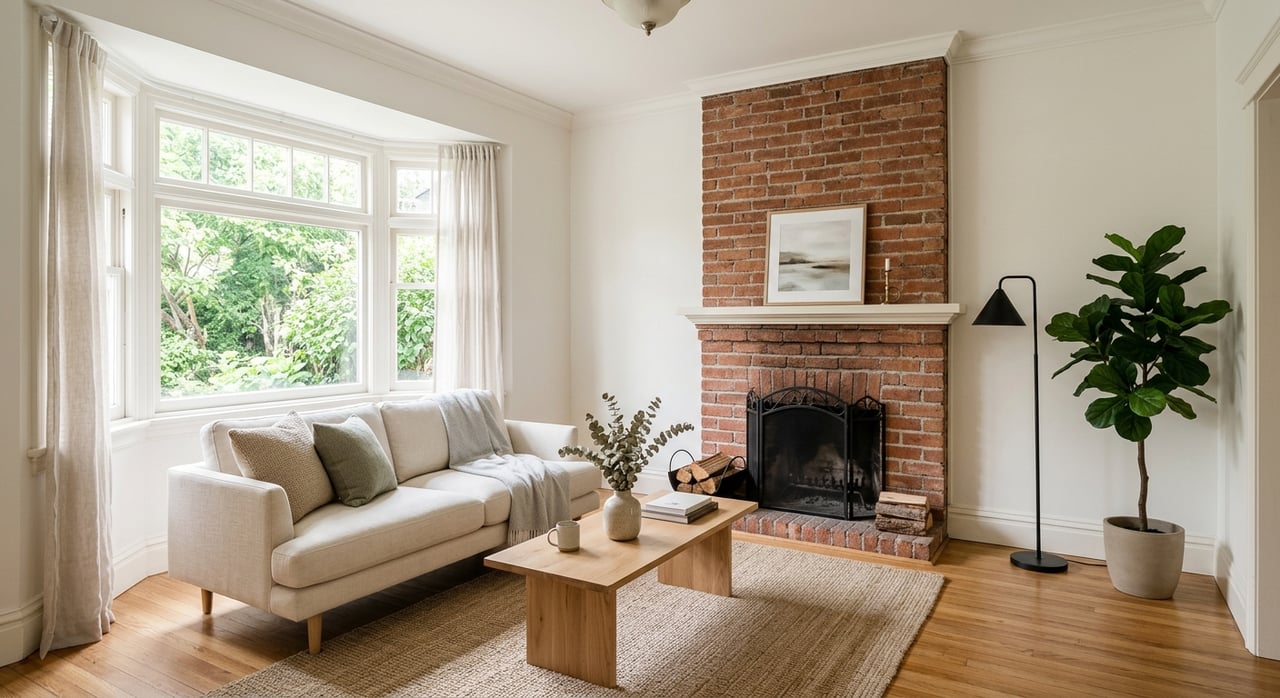
The living room often carries the most visual weight in listing photos and showings. In a historic brick home, it can also show off ceiling height, windows, trim, fireplace details, and the flow into nearby rooms. Use fewer pieces of furniture, keep walkways open, and let the room’s proportions read clearly.
Primary bedroom next
A calm, simple primary bedroom helps buyers focus on space rather than your personal style. Neutral bedding, clear surfaces, and balanced furniture placement usually work best. The goal is to make the room feel restful and roomy.
Keep the kitchen clean and clear
Kitchens do not need heavy decorating to feel appealing. They need clean counters, bright surfaces, and enough open space for buyers to picture daily use. Remove small appliances you do not use every day and leave just a few simple items for warmth.
Define the dining area
Many historic homes have dining rooms or dining areas that help buyers understand how the main floor functions. A simple table setting, good lighting, and enough space around the furniture can help the room feel useful without feeling crowded.
Give bonus spaces a purpose
If your home has a basement room, enclosed porch, or extra room, avoid leaving it undefined. Stage it as a home office, reading room, workout corner, or flexible guest space. When buyers do not know what a room is for, they often assume it is less useful than it really is.
Highlight historic features, not just updates
In McKinley Heights, one of the biggest staging mistakes is trying to make a historic home look like a generic new build. The better approach is to support the home’s original character with lighter, simpler styling.
The city’s preservation guidance for the district emphasizes preserving existing buildings and their historic character, while also recognizing the value of original building features and design. You can see that focus in the McKinley Heights Historic District information from the City of St. Louis. For sellers, that means your staging should help buyers notice what is already there.
Try to keep these features visible whenever possible:
- Brick details
- Original trim and window casings
- Stair rails and banisters
- Ceiling height and room proportions
- Decorative cornices or period ornament
A state historic district document notes a mix of small vernacular homes and later brick houses with details like mansard roofs, Italianate cornices, and Revival-style ornament. Those are not distractions from the sale. They are part of the appeal.
Use less furniture than you think
Because many homes in the neighborhood were built in an earlier era, room layouts can feel different from newer construction. Oversized sectionals, bulky bedroom sets, and too many accent pieces can make rooms look smaller than they are, especially in photos.
A better plan is to edit down. Keep only the furniture that clearly shows how the room works. If a piece blocks a window, hides trim, or interrupts the line of sight across the room, it is probably working against you.
Focus on low-cost staging wins
You do not need a huge budget to improve presentation. NAR’s 2025 staging report found that the median spend was $1,500 when using a staging service, compared with $500 when the seller’s agent personally staged the home. That makes selective, practical staging a smart option for many sellers.
The most common improvement recommendations in the report were also very manageable:
- Decluttering
- Entire-home cleaning
- Improving curb appeal
Those basics matter because they improve both in-person showings and online presentation. NAR also found that photos, physical staging, videos, and virtual tours all play an important role in listing presentation.
A simple McKinley staging checklist
Before your home goes live, work through this short checklist:
- Remove extra furniture from main rooms
- Clear kitchen and bathroom counters
- Pack away highly personal items
- Deep clean the entire home
- Open window areas and maximize natural light
- Make sure trim, rails, and architectural details are visible
- Add simple, neutral decor rather than bold statement pieces
- Tidy the front entry and exterior approach
- Assign a clear purpose to every extra room
- Prepare the home for professional photography
Be careful with exterior changes
Curb appeal matters, but in a historic district, simple maintenance is usually the safest and most practical path before listing. Clean up landscaping, sweep walkways, touch up where appropriate, and make the entry look cared for.
If you are considering exterior alterations, remember that McKinley Heights is governed by historic district standards. The City of St. Louis ordinance page for the district notes that exterior work on buildings in the district is subject to those standards. For many sellers, visible design changes are less helpful than basic cleanup and strong presentation.
Partial staging can be enough
A full-service staging package is not the only path to a strong listing. In many cases, partial staging paired with professional photos gives buyers everything they need to connect with the home.
This approach works especially well when the home already has strong features. If your brick exterior, trim, windows, staircase, or period details are part of the story, the goal is not to compete with them. It is to frame them well so buyers can see both the charm and the function.
What to avoid before listing
The biggest pre-listing mistake is usually overdoing it. Buyers may arrive with polished expectations, but that does not mean your home needs to look staged for television.
Try to avoid these common missteps:
- Overfilling rooms with furniture
- Using trendy decor that distracts from the home itself
- Covering original features with heavy styling
- Starting major cosmetic changes without a clear plan
- Leaving flex spaces undefined
In McKinley Heights, the strongest presentation usually feels clean, bright, and respectful of the home’s history.
When you are ready to prepare your home for the market, working with a local team can help you decide what is worth doing and what is not. The Winckowski Group helps St. Louis sellers create a smart plan for pricing, presentation, and marketing so your home stands out for the right reasons.
FAQs
What rooms should sellers stage first in a McKinley Heights home?
- Start with the living room, primary bedroom, kitchen, and dining area, since those spaces have the biggest impact on buyer perception according to NAR’s 2025 staging data.
Is partial staging enough for a home in 63104?
- Yes. Partial staging combined with decluttering, cleaning, curb appeal work, and strong photography can be a practical and budget-friendly option.
What kind of staging works best for historic brick homes in McKinley Heights?
- Simple, neutral staging usually works best because it helps buyers focus on original details, room scale, and layout instead of heavy decor.
Should sellers renovate before listing a McKinley Heights property?
- Not always. For many homes, the better move is to clean, declutter, and highlight existing character rather than over-renovating to mimic newer homes.
Are exterior updates restricted in McKinley Heights?
- Exterior work may be governed by local historic district standards, so sellers should be cautious about visible changes and often focus first on maintenance and cleanup.