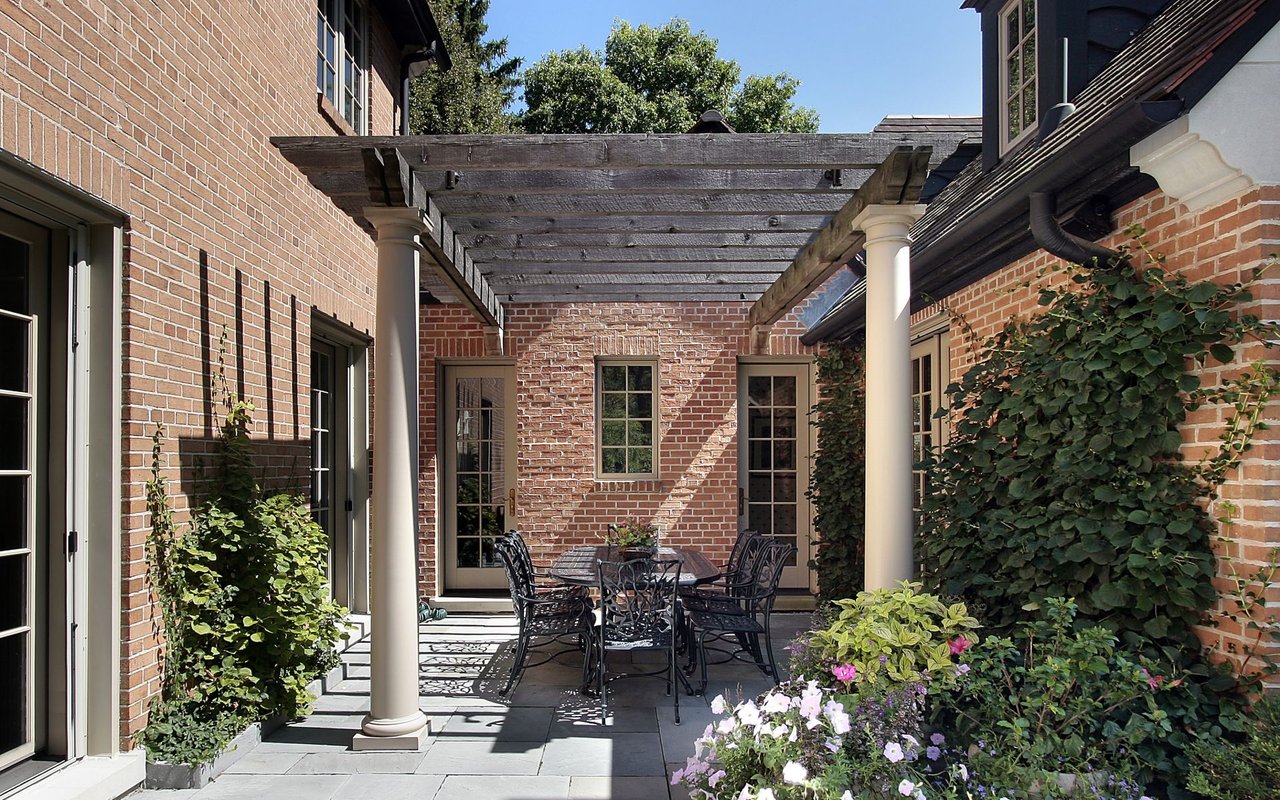
Picture the moment near the end of a closing when the settlement agent slides over a document you have not been asked about yet: the tax proration. Your lender's estimate said $180 a month for property taxes. The number on the page is less than half that. Nobody lied to you. The house has an active tax abatement, and for now, you are only paying on a fraction of what the county will eventually consider the home worth.
That gap between what you are paying today and what you will owe later is not a rounding error. It is the single biggest reason a renovated home in St. Louis City can carry a lower monthly cost than an equivalent home in the county, and it is the reason a buyer who does not ask the right question at the right time can end up with a tax bill that jumps hundreds of dollars a month with no warning attached.
The Price Gap Everyone Notices, But Nobody Fully Explains
As of July 2026, a City home sits in the low $260,000s on the median, while a comparable County listing runs closer to $325,000. Most explanations stop at the obvious: older housing stock, smaller lots, a different mix of condos and rehabs. All of that is real. But it skips the mechanism that makes a freshly gut-renovated City brick two-flat competitive with a builder-grade County ranch in the first place: the tax bill on that City property may still be calculated as if the renovation never happened.
That is not a loophole. It is a deliberate tool the city has used for decades, and understanding how it works changes how you should read a listing.
What Tax Abatement Actually Freezes
Tax abatement in the City of St. Louis freezes the assessed value used to calculate your property tax bill at its pre-development level, even after a lot goes from vacant to a finished home, or a rundown building goes through a full rehab. The city's standard abatement runs five to ten years. A more aggressive version, authorized under Missouri's Chapter 353 redevelopment law, can run up to 25 years total: the first ten years abate all of the new taxable value created by the project, and the next fifteen years tax only half of it.
Some Chapter 353 parcels even generate two separate tax bills, one for the land and one for the pre-development improvements, a detail the City Assessor's office spells out plainly on its own tax abatement page. If you want to check whether a specific address currently carries an abatement, the Assessor's office takes that question directly at (314) 622-5543, since determining abatement status is not something the office originates but something it can confirm on request.
The $600,000 House Paying $400 in Taxes
The clearest illustration of how far this stretches comes from St. Louis Magazine's reporting on the program: a buyer can purchase an empty lot, build a $600,000 house on it, and pay property taxes only on the value of the land until the abatement runs out. Between 2000 and 2014 alone, the magazine found that abatements citywide added up to $307.5 million in forgone tax revenue, money that would otherwise have flowed to schools, city services, and infrastructure.
That is the scale of the incentive. It is also the scale of the deferred bill waiting on the other end for whoever owns the property when the clock runs out.
The Cliff Nobody Puts In The Listing Description
Here is the part that catches buyers off guard. Abatement is a schedule, not a discount that lasts forever. When it winds down, the taxable value steps up toward what the county actually considers the home worth, and your bill rises with it, independent of anything you did or did not do to the house.
| Abatement stage | Duration | Taxable value |
|---|---|---|
| Standard City abatement | 5 to 10 years | Frozen at pre-development level |
| Chapter 353, first phase | Years 1 through 10 | 0% of new value taxed |
| Chapter 353, second phase | Years 11 through 25 | 50% of new value taxed |
| After abatement ends | Ongoing | 100% of assessed value taxed |
A house you bought at year three of a ten-year standard abatement will feel very different at year eleven than it did at closing, and none of that difference shows up in a home value estimate built from comparable sales. The comparable sale might have closed under its own abatement too.
The good news is that the abatement period is tied to the property and its original approval date, not reset by a change in ownership. If you buy a home mid-schedule, you inherit whatever years remain rather than starting a fresh clock. That makes the timing question answerable, and worth answering before you write an offer, not after your first full tax bill arrives.
What To Ask Before You Write An Offer
A few questions turn this from a surprise into a planning input:
- Is this property currently receiving tax abatement, and is it a standard abatement or a Chapter 353 abatement?
- What year of the schedule is the property in right now, and when does the current phase end?
- What would the annual tax bill look like once the abatement fully expires, calculated on the home's full assessed value?
- Does the seller or listing agent have the original abatement approval documentation, since the Assessor's office confirms status but the abatement itself is created through an ordinance passed by the Board of Aldermen?
None of these questions require guesswork. They require a phone call and a little patience, and they belong in your due diligence right alongside the inspection.
A New Door For Existing Homeowners, Not Just Developers
Tax abatement in St. Louis has historically leaned toward developers and investors doing large rehab or new construction projects, with applicants needing a member of the Board of Aldermen and the relevant neighborhood organization behind them before construction even begins. That changed in a meaningful way in March 2024, when the city adopted Ordinance 71795, also known as Board Bill 174. It empowered the Land Clearance for Redevelopment Authority to let existing residents in the JeffVanderLou and St. Louis Place redevelopment area apply tax abatement to their own property improvements, not just to developers building or flipping homes there.
If you already own in that footprint and have been putting off a major renovation, that ordinance is worth a direct conversation with the LCRA rather than an assumption that abatement is only for builders.
Reframing What The City's Price Advantage Actually Is
None of this means tax abatement is a trap. Used with a clear timeline, it is exactly what it was designed to be: a real, meaningful reduction in carrying costs during the years a neighborhood is rebuilding its tax base. Buying early in a fresh ten-year or 25-year window can mean a decade or more of predictable, low taxes on a home that otherwise looks and lives like a much more expensive property.
The mistake is treating the City's lower median price as a pure discount rather than what it actually is in many cases: a lower price today in exchange for a scheduled increase later. Once you know which one you are looking at, both can work in your favor. You just have to ask the question before the number on the settlement statement becomes the number you are stuck explaining to yourself two years from now.
Frequently Asked Questions
Does St. Louis County offer the same kind of tax abatement? The county has its own economic development and property tax tools, but the scale and structure differ from the city's program, and the 25-year Chapter 353 schedule described here is specific to City of St. Louis redevelopment areas.
Who actually approves a new tax abatement, and can I apply for one myself? Tax abatement is created through an ordinance passed by the Board of Aldermen, facilitated by the St. Louis Development Corporation, and generally requires support from your ward's alderman and the relevant neighborhood organization. It is not something the Assessor's office grants, though that office can confirm whether a specific parcel already has one.
If I buy a home partway through its abatement, do I get the full remaining benefit? Yes. The abatement period is tied to the property's original approval date rather than reset at sale, so a buyer purchasing mid-schedule inherits whatever years are left on that specific parcel's timeline.
If you are weighing a City listing against a County one and want a straight answer on where a specific property sits on its abatement clock before you write an offer, The Winckowski Group can help you pull that history and run the real numbers. Request your free home valuation and let's talk through what the tax bill actually looks like three, five, and ten years from now.